
Modernise legacy payment infrastructure
Replace fragmented legacy systems with a modular, API-first payment gateway built for scale, control and operational visibility.
- Unified gateway and integrations
- Flexible checkout, tokenisation and APIs
- Better visibility, reporting and control



The challenge
Banks running payments on legacy platforms pay twice: once to keep old systems alive, and again every time the business needs something new.
- Every change request waits in the legacy vendor's queue
- New payment methods and merchant products take months to launch
- Disconnected tools mean manual settlement and reconciliation
- Regulatory and data-residency rules limit where payment data can run
The FinOn solution
FinOn's White-Label Payment Gateway provides one configurable payment layer, helping banks modernise without rebuilding everything at once.
- Unified gateway and integrations: connect your processor, acquirers and payment methods through ready connectors
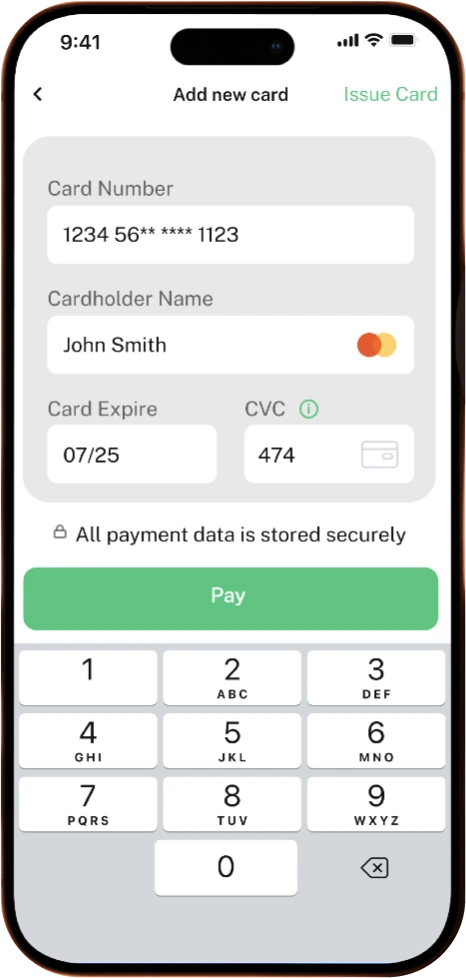
- Flexible checkout, tokenisation and APIs, with routing, payment methods and checkout configured in the gateway admin
- Better visibility, reporting and control through one interface
- Cloud or on-premises deployment to meet data-residency rules
Inside the FinOn portal
Your payments and operations teams run acquiring from one interface, under your bank's brand.
1
2
3
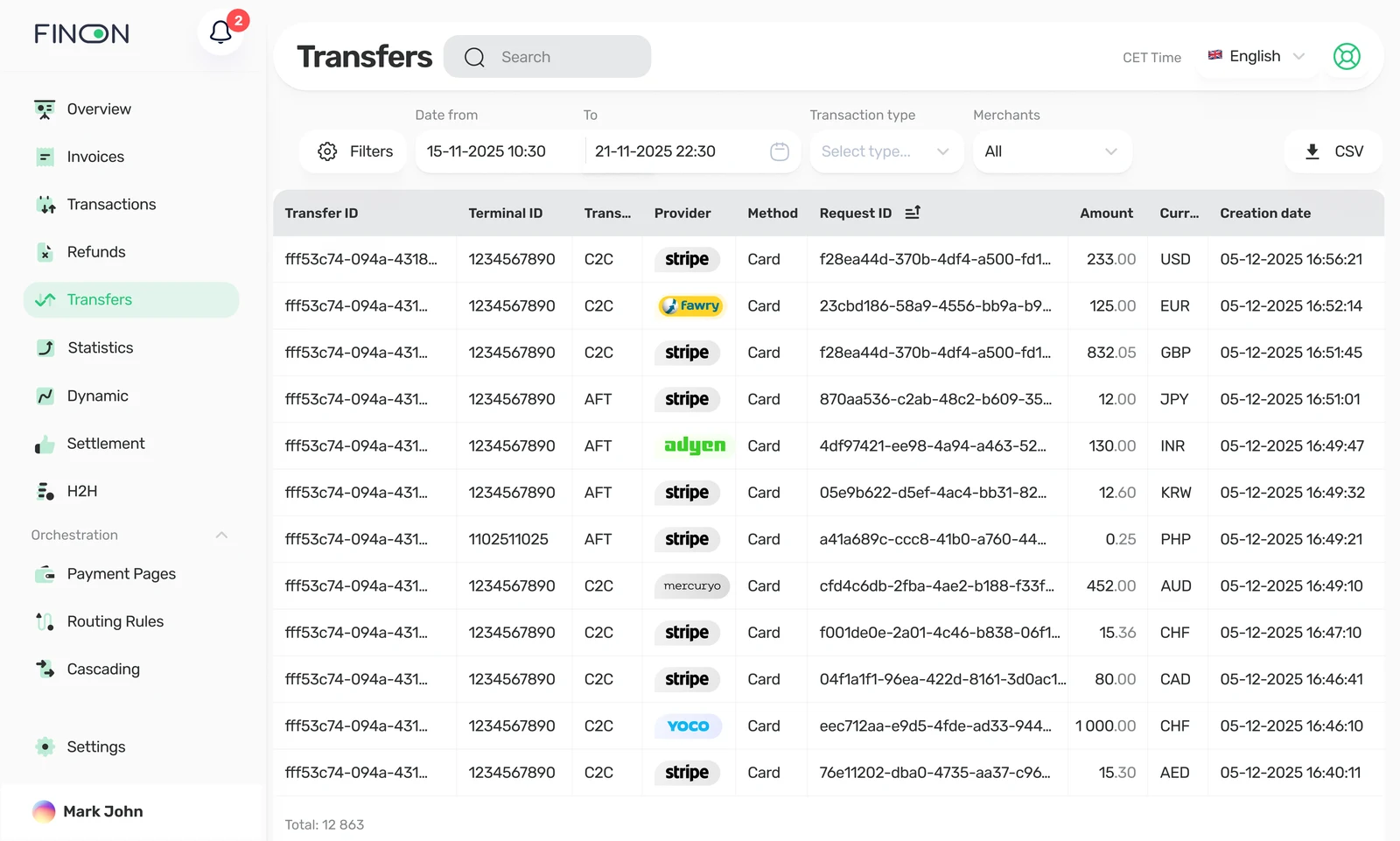
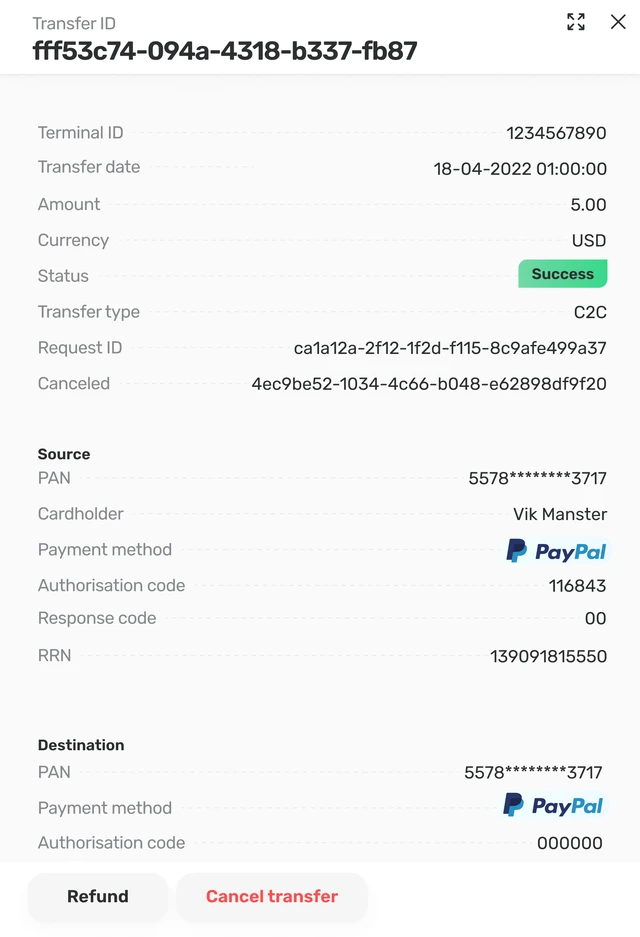
FinOn portal, demo data
- 1
Search and filters
Find any payment by ID, date range, transaction type or merchant, and export the results to CSV.
- 2
Provider on every payment
See which provider and terminal processed each payment. Routing rules and cascading are set up in the same portal.
- 3
Full transaction record
Open a payment to see its RRN, authorisation and response codes and card details, and refund it from the same view.
How banks migrate from a legacy payment gateway
A phased migration, so live payments are never put at risk.
- 01
Discovery
We map your current gateway, its dependencies, volumes and compliance requirements, and agree the target setup and migration plan.
- 02
Integration and testing
The gateway is deployed in the cloud or on premises and connected to your acquirers, processors and core banking. Branding, checkout and routing are configured and tested end to end.
- 03
Pilot
A limited group of merchants goes live on FinOn while the legacy gateway keeps running.
- 04
Phased traffic migration
Merchants and traffic move over in stages. The legacy route stays available as a fallback during cutover.
- 05
Monitoring and rollback
Approval rates, errors and response times are tracked against the legacy baseline, and traffic can be rolled back at any stage. The legacy gateway is retired once the agreed criteria are met.
Why choose FinOn for your white-label payment gateway?
PCI DSS certified platform
Pass your security review faster with a PCI DSS certified gateway, with velocity rules, BIN and country restrictions, and allow/deny lists.
EMV 3DS 2.2 built in
Use integrated 3D Secure flows, including challenge, exemption and step-up options when applicable.
Cloud or on-premises deployment
Run the gateway in the cloud or in your own data centre to meet local data-residency requirements, with full control of configuration and data.
Multi-acquirer routing with failover
Connect to your own processor or switch, then add further acquirers with primary and secondary routes, availability checks and automatic failover.
Customer story
How Qi Card modernised e‑commerce and 3D Secure
Qi Card, Iraq's largest digital payments ecosystem and operator of the SuperQi app, has worked with FinOn as a technology partner since 2023 to modernise its e‑commerce gateway and 3D Secure infrastructure.
Read the customer storyWhat FinOn replaces, and what you keep
The gateway replaces your legacy e-commerce layer. Everything your bank already runs well stays where it is.
Replaced by the FinOn gateway
- Legacy e-commerce gateway and payment pages
- Checkout, tokenisation and payment method integrations
- Routing to your processor and acquirers, with failover
- 3D Secure integration
- Merchant portal and gateway admin
Added when you need it
- FinOn Back Office: merchant billing, settlement, reconciliation and reporting
- 3DS Server: EMVCo-approved 3DS for your acquiring business
- 3D Secure ACS: authentication for your own cardholders
Stays with your bank
- Core banking and ledgers
- Card processing and switch connections
- Acquiring licence and card scheme memberships
- Settlement accounts and treasury
Frequently asked questions
Answers to the questions banks typically ask before modernising their payment gateway.
Product and technology
Can FinOn integrate with our existing banking systems?
Yes. FinOn connects to existing acquirers, processors and banking partners through APIs and ready-made connectors, so you can modernise the payment layer without replacing those partners. FinOn Back Office also integrates with core banking and ERP systems.
Is the platform secure and compliant?
Yes. FinOn White-Label Payment Gateway is PCI DSS certified and supports EMV 3DS 2.2. Fraud controls include velocity rules, BIN and country restrictions, allow/deny lists and external fraud integrations. Your bank’s own compliance scope depends on its deployment and transaction flows.
Which payment methods does the gateway support?
Cards with and without 3D Secure, tokenised payments, Apple Pay and Google Pay, instalments, recurring payments, alternative payment methods (APMs) and local payment schemes.
How does 3D Secure work in the FinOn gateway?
EMV 3DS 2.2 is built into the gateway, which connects to a 3DS Server, the card schemes' Directory Servers and issuers' ACS. FinOn's own 3DS Server and ACS are EMVCo-approved for EMV 3DS 2.3.1, so a bank can run both acquiring and issuing authentication on one platform.
Can we route transactions across several acquirers?
Yes. The gateway supports multi-acquirer routing with primary and secondary routes, availability checks and automatic failover, so traffic moves to a backup route if one acquirer is unavailable.
What deployment options are available?
Cloud or on-premises. Both approaches provide control over your configuration, data and workflows. The architecture supports horizontal scaling, load balancing and clustered or active-active deployment.
Can we keep our own branding?
Yes. FinOn supports custom domains, branded payment pages, a merchant portal, back-office interfaces, API documentation and email templates, so customers and merchants interact with your bank’s brand.
Migration and commercial
How long does a modernisation project usually take?
It depends on scope. Connecting a single acquirer is a different project from moving every merchant off a legacy gateway. After discovery you receive a phased plan with dates for each stage: integration and testing, pilot and traffic migration. Acquirer connections, payment methods, certification steps and regulatory approvals all affect the timeline.
How do we migrate from a legacy gateway without downtime?
Run the migration in phases. FinOn is connected alongside your existing gateway, merchants and traffic move over in stages, and primary and secondary routes keep a fallback path open during cutover. The plan also covers card tokens, recurring payments and refunds on transactions processed by the legacy system. The legacy gateway is switched off only after volumes on FinOn are stable.
Should a bank build its own payment gateway or buy a white-label one?
Building means funding PCI DSS certification, EMV 3D Secure integration, scheme and acquirer connections and a merchant portal before the first transaction. A white-label gateway starts from a certified platform that carries your brand, so the bank invests in products and merchants instead of core infrastructure. See our guide White-Label Payment Gateway vs. Building Your Own.
What are the commercial and hosting options?
These are separate choices. Commercial model: a software licence or a managed service. Hosting: your own data centre or the cloud. Responsibility for operations and support follows from that choice and is set out in the contract. Pricing depends on the modules you need and transaction volumes, and is agreed after a discovery call.
Which countries and regions does FinOn work in?
FinOn works with banks and payment providers worldwide. The gateway connects to international card schemes, local payment schemes and alternative payment methods, and markets or methods that are not yet connected can be added through integration work. Cloud, on-premises or in-country deployment helps banks meet local regulatory and data-residency requirements. FinOn is headquartered in Dubai, United Arab Emirates.
What does the bank own with a white-label payment gateway?
The brand and the customer relationship: your domain, payment pages, merchant portal, API documentation and emails. You also control transaction and merchant data and every configuration, from routing and fraud rules to payment methods. With on-premises deployment the infrastructure is yours too. Licence terms are set in the contract.
What should a bank look for when selecting a white-label payment gateway?
Look for a modular API-first architecture, connectors to existing partners, PCI DSS certification, tokenisation, multi-acquirer routing with failover, a branded merchant portal and unified reporting. FinOn White-Label Payment Gateway brings these capabilities together in one platform.
Find the right solution for your bank.
Share your goals and current setup. We'll help map the right payment gateway approach for your use case.
More use cases for banks
Launch merchant acquiring under your brand
Deploy the core software stack your bank needs to launch and scale merchant acquiring: gateway and merchant onboarding, 3DS and fraud controls, billing and settlement.
View use case Back OfficeModernise merchant acquiring
Replace legacy back-office systems with automated billing, settlement and reporting, with merchant-level reporting and operational control across acquiring.
View use case Back OfficeCentralise payment reconciliation
Reconcile transactions across cards, instant payments, APMs and multiple processing platforms, with automated matching and exception handling.
View use case 3DS Server and ACSBring 3D Secure in‑house
Authenticate online card payments on the acquiring side with 3DS Server and your own cardholders with ACS, as a software licence or a managed service.
View use case xDirectLaunch cross-border remittances
Keep more transaction and FX revenue with direct and semi-direct remittance corridors, delivered in your app under your brand.
View use case White-Label GatewayExpand into new markets with local payment methods
Launch new products, geographies and payment experiences faster, with multi-currency, alternative payment methods and configurable flows for new channels.
View use caseExplore more insights

White-Label Payment Gateway RFP Checklist: How to Choose a Vendor
A copy-ready RFP checklist for PSPs, acquirers and banks comparing white-label payment gateway vendo...

