3DS ACS
- Reduce fraud with risk-based authentication
- Increase approval rates with frictionless flow
- Get operational transparency & monitoring

is a scalable cardholder authentication solution for card issuers and processors, built to secure the payment process across e-commerce transactions and internet banking, and to meet EMV 3DS 2.x protocols.

Transaction initiated
Real-time risk analysis

Adaptive authentication

Approved or declined
Move beyond SMS-only OTP and cut fraud without compromising the checkout experience.
Go live with issuer authentication as a service fast and stay compliant while scaling.
Support multiple issuers/BINs with different policies and branding without ops chaos.

Supports multiple authentication methods, including one-click app (OOB), one-time passcodes (OTP), risk-based authentication (RBA), decoupled and non-payment authentication
Advanced RBA rules dynamically determine the required authentication level based on transaction context. The ACS evaluates amount, user behavior, device fingerprinting, and geolocation to apply the most appropriate challenge method.

Merchant whitelisting lets trusted merchants bypass the challenge for approved transactions. Issuers can easily manage trusted merchants through the administrative interface.

Built-in scoring system for real-time security assessment and challenge-type definition. Can operate stand-alone or integrated with external fraud engines.

Fully approved by EMVCo and certified by major card schemes, including Visa, Mastercard, AMEX. JCB, UnionPay, and mada, ensuring compliance with the latest security standards and protocols

User-friendly interface with access to RBA settings, system configuration, user management, and transaction search. Includes comprehensive dashboards, logs, and analytics for full operational visibility and security.


Transparent pricing with no hidden fees or service charges. Open-source technologies significantly reduce licensing and maintenance costs compared to legacy ACS vendors, lowering total cost of ownership.

Full control over cardholder-facing authentication flows, branding, languages, and challenge logic, letting issuers tailor the experience to different programs, regions, and customer segments.
Why FinOn 3DS ACS

Built-in APIs provide fast, seamless integration with issuer systems, card management platforms, notification service, and fraud engines in the authorization flow.
Modern 3D Secure built for

Built on a modern, scalable Java-based architecture, FinOn ACS supports cloud, on-premise, and hybrid deployments across Linux and Windows, ensuring a highly available, horizontally scalable solution.

Designed for processors and BIN sponsors, this ACS solution supports multiple issuers, programs, and BINs within a single platform, each with independent configurations, policies, and branding.
FinOn 3D Secure ACS evaluates each transaction in real time using contextual data such as amount, device and behavioral signals, geolocation, and issuer-defined rules. Based on this assessment, the ACS solution dynamically applies either a frictionless flow or the appropriate challenge, reducing fraud while minimizing unnecessary customer friction.
Authentication rules, thresholds, and challenge logic in FinOn ACS can be configured through an administrative interface without vendor-side development. This lets issuers and processors to quickly adapt authentication behavior to changing fraud patterns, regulatory updates, or business requirements.
Yes. FinOn ACS is designed for multi-issuer and multi-BIN environments, enabling independent configurations, branding, and authentication policies per issuer or card program, all managed centrally within a single deployment.
By applying adaptive checks, FinOn ACS approves low-risk transactions using frictionless flows, while challenges are triggered only when necessary. This improves the checkout experience versus legacy SMS-only methods and lifts overall approval rates.
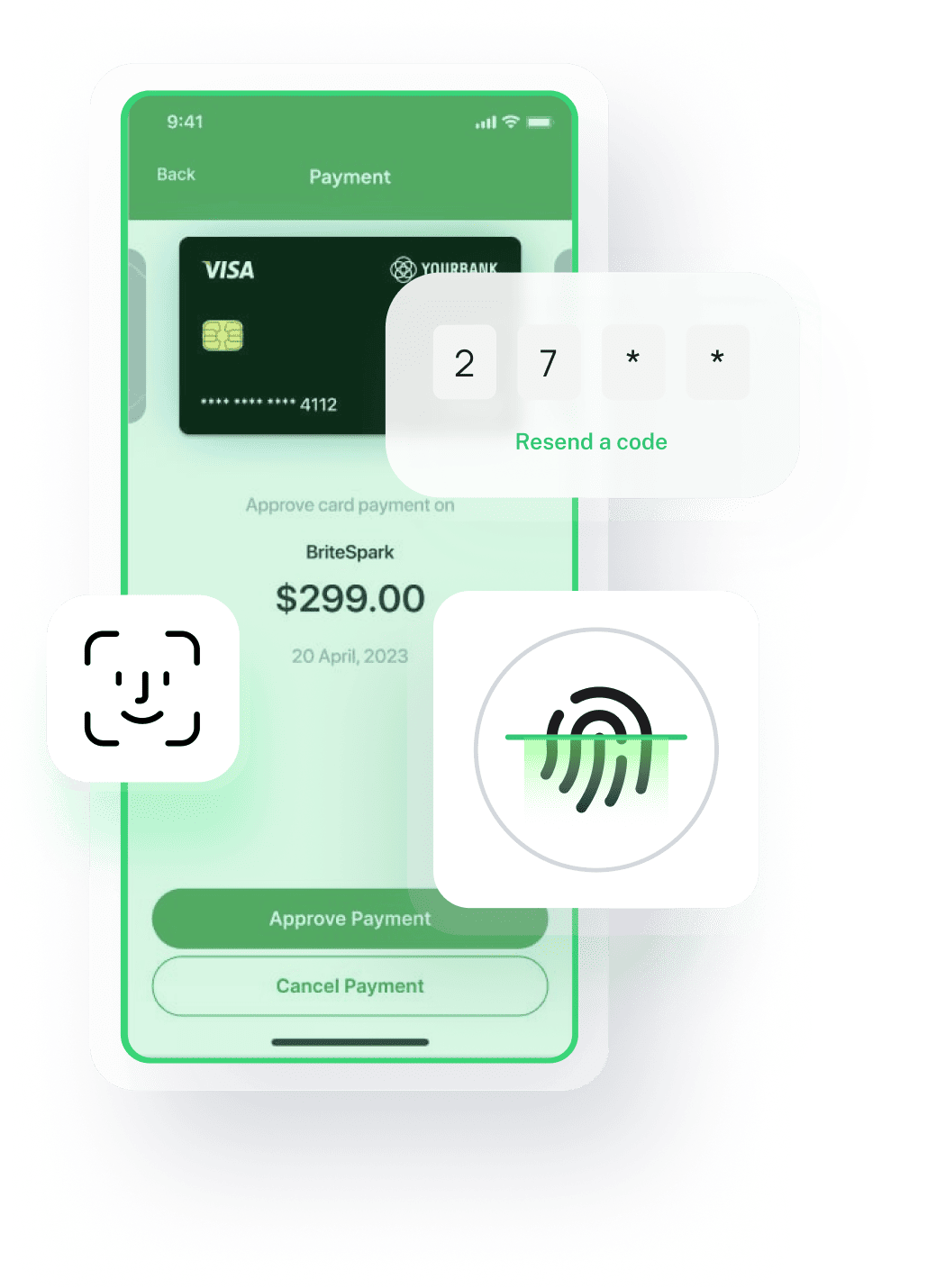
Yes. FinOn ACS supports EMVCo out-of-band (OOB) authentication and biometric verification through the Authentication SDK, which runs inside your own mobile app. The SDK combines biometric verification (Face ID, fingerprint, device credentials) with the Access Control Server for EMV 3-D Secure flows, letting issuers, fintech apps and wallet providers deliver Strong Customer Authentication without sending the cardholder to an SMS code.
The SDK supports:
No. The SDK does not store or transmit biometric
data.
Verification is performed by the operating system or banking
application, and the SDK only receives a success/failure result, which is
cryptographically bound to the authentication session.
FinOn offers support for:
This lets issuers and fintech platforms embed the authentication service across app environments, with a consistent cardholder experience for every payment.
They sit on opposite sides of the same transaction. The 3DS Server sits on the merchant side. It initiates authentication, assembles the transaction data, and sends the request to the card scheme's Directory Server. Acquirers, PSPs, gateways and payment orchestrators buy this component. The Access Control Server sits on the issuer side. It receives the authentication request, evaluates the risk, and decides whether to approve the transaction frictionlessly or challenge the cardholder. Banks, card fintechs, processors and BIN sponsors buy this component. They are separately certified, handle different data, and are usually bought by different organisations. If you issue cards, you need an ACS. If you acquire, process or route payments, you need a 3DS Server. If your institution does both, you need both, and they can be configured to communicate directly for on-us transactions, bypassing the Directory Server where scheme rules permit. FinOn provides both. ACS FINON and 3DSS FINON are both approved for EMV 3DS 2.2.0 and 2.3.1.
FinOn ACS supports one-time passcodes (OTP), out-of-band approval through your own mobile app, biometric verification, risk-based frictionless approval, decoupled authentication and non-payment authentication. Methods are configured per card programme, region and customer segment, so different portfolios can use different approaches within one deployment. Biometric and app-based confirmation run through the Authentication SDK embedded in your iOS or Android application, where verification is performed by the operating system or banking app and the ACS receives only a cryptographically bound result. Which method applies to a given transaction is decided by your risk rules, not fixed by the platform. Low-risk transactions can pass frictionlessly with no cardholder interaction at all, while higher-risk ones step up to the challenge method you have configured for that segment.
Do you have any other question?
Let’s connect - and walk you through a personalized demo.
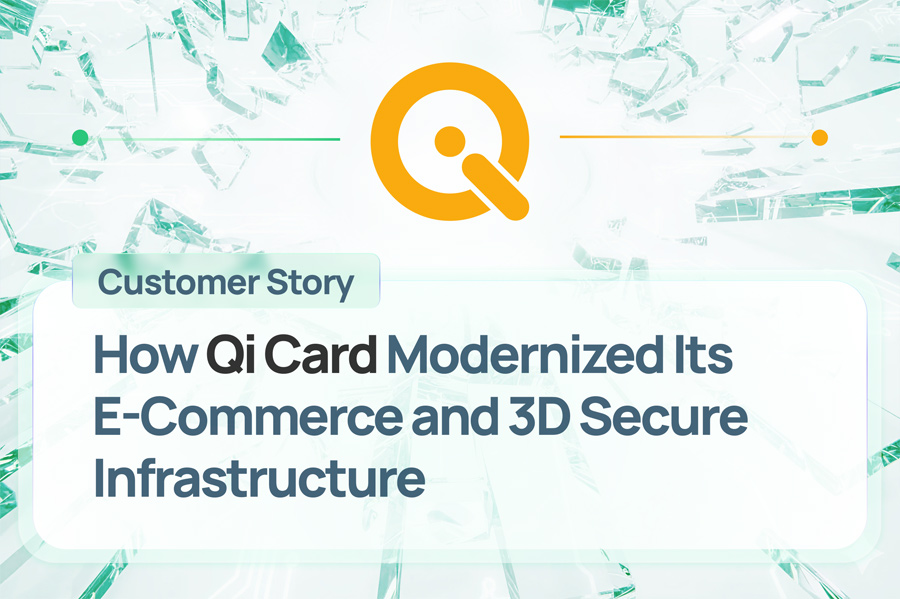
Learn how Qi Card, Iraq’s largest digital payments ecosystem, modernized its e-commerce and 3D Secur...
Let’s connect - and walk you through a personalized demo.